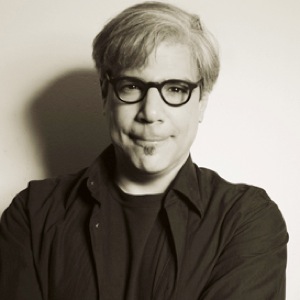
Calamar has been a DJ with KCRW since the mid-90′s and got his start in the music supervision biz working on the soundtrack of the 1998 film Varsity Blues. He previously picked up two Grammy Awards nominations for his work on the Six Feet Under soundtrack.
Monday, December 6, 2010
KCRW DJ Gary Calamar Nominated for Grammy Award
Calamar has been a DJ with KCRW since the mid-90′s and got his start in the music supervision biz working on the soundtrack of the 1998 film Varsity Blues. He previously picked up two Grammy Awards nominations for his work on the Six Feet Under soundtrack.
Posted by " Dallas " at 8:08 AM 0 comments
Labels: Gary Calamar
Monday, September 27, 2010
Ears We Trust: True Blood/Dexter Music Supervisor Gary Calamar
Freelance Whales: Weathervanes (FRENCHKISS / MOM+POP)
The five-piece band from the streets and subways of NY mixes synthesizers with banjo, glockenspiel, harmonium and, um, waterphone? Far out and beautiful.
Best Coast: Something In, The Way and Make You Mine EPs (POST PRESENT MEDIUM, GROUP TIGHTENER)
Sun-bleached and fuzzed-out girl group sounds from the City of Angels.
David Bowie: Hunky Dory (EMI)
A perfect album of timeless, cinematic pop. All killer, no filler: “Life On Mars?,” “Queen Bitch,” songs about Warhol and Dylan. Smart and fun. Released one year before Ziggy Stardust, when changes were a-happening. “Kooks” kills me every time.
Whenever I listen, I discover a new favorite song for all time. “September Gurls” and “Thirteen” are simply brilliant. R.I.P. Alex Chilton and Andy Hummel.
Various Artists: One More Record Please (BEAR FAMILY)
A record about records from mostly obscure country and rockabilly artists. For those who were born in ‘45 and turned 33 in ‘78. Go down to your local record store and check it out.
Posted by " Dallas " at 4:49 PM 1 comments
Labels: Gary Calamar
Thursday, September 16, 2010
The Man Behind the Music of HBO's "True Blood," Gary Calamar, Part 1
What is the sound of Bon Temps?
It's got a few different sounds. I mean, it's got the sound of Merlotte's, which is a little bit more, upbeat bar music, rockabilly, southern Rock. And then in the first season we had some music for Sookie playing at her house, which was like the Watson Twins covering The Cure and stuff like that. But, yeah, all of it has sort of a dark undercurrent to it like a lot of New Orleans blues seems to have. Those classics Slim Harpo, Willie Dixon, and Howlin' Wolf. Those are what really kind of speak to me as the sound of Bon Temps.
I heard [series creator] Alan Ball say a rule of his was to "Never use opera music" in a vampire show, one of the things he decided early on along with not giving them cheesy contact lenses...
I don't remember Alan actually saying that to me. But I think his goal was to have a non-traditional kind of sound to the show. And not use, you know, sort of overly dramatic types of music that have been used in vampire series in the past, or movies in the past.
read on
Posted by " Dallas " at 5:10 PM 0 comments
Labels: Gary Calamar, music
Tuesday, July 13, 2010
APM Music Podcast Series with True Blood's Gary Calamr, Nathan Barr and Jace Everett
The Film & TV Music Podcast #66 with Gary Calamar - True Blood’s Music Supervisor
Listen to the podcast with Gary Calamar
Ann Donahue, Senior Editor at Billboard, interviews Gary Calamar about his role as Music Supervisor for HBO’s True Blood.
SHOW NOTES:
0:03 – Intro – Ann Donahue, Senior Editor at Billboard, interviews Gary Calamar.
1:35 – Gary Calamar on how he got the True Blood job.
3:08 – Gary Calamar on the difference between Six Feet Under and True Blood.
3:58 – Gary Calamar on the Southern influences of True Blood and its impact on the music.
5:13 – Gary Calamar on how True Blood has changed his approach to other work.
6:09 – Gary Calamar on Alan Ball as a songwriter.
4:49 – Gary Calamar on the end credits music of True Blood.
9:11 – End
The Film & TV Music Podcast #67 with Nathan Barr, True Blood Original Music Composer
Listen to the podcast with Nathan Barr
Ann Donahue, Senior Editor at Billboard, interviews Nathan Barr about composing for HBO’s True Blood.
SHOW NOTES:
0:03 – Intro – Ann Donahue, Senior Editor at Billboard, interviews Nathan Barr.
1:25 – Nathan Barr on how he got involved with True Blood.
2:00 – Nathan Barr on how he won the job for True Blood.
2:25 – Nathan Barr on his inspirations for the music in True Blood.
3:13 – Nathan Barr on how he composes the music for True Blood and the benefits of playing his own instruments.
3:50 – Nathan Barr on the recurring sonic themes in True Blood.
4:49 – Nathan Barr on the unique instruments he uses.
5:50 – Nathan Barr on his collaboration with Lisbeth Scott.
6:35 – Nathan Barr on what else he’s working on.
7:46 – End
The Film & TV Music Podcast #65 with Jace Everett musician and writer and performer of True Blood’s title song “Bad Things”
Listen to the podcast with Jace Everett
SHOW NOTES:
0:03 – Intro – Ann Donahue, Senior Editor at Billboard, interviews Jace Everett.
1:05 – Jace Everett on how he got involved with True Blood.
1:55 – Jace Everett on how he found out that Alan Ball had chosen his song.
2:29 – Jace Everett on the excitement of hearing the news and what it meant to his career at the time.
3:16 – Jace Everett on how the True Blood inspired his new album
4:00 – Jace Everett on the inspiration of “Bad Things.”
4:54 – Jace Everett on his current tour.
5:12 – Jace Everett on the fan reaction he has received.
6:14 – End
Posted by " Dallas " at 5:20 PM 0 comments
Labels: Gary Calamar, Jace Everett, music, Nathan Barr
Sunday, November 23, 2008
'True Blood' tunes provide HBO series with extra sustenance
Vampire saga gets crucial doses of humor, menace from carefully chosen soundtrack
When a vampire and a mortal hop into the bathtub for a candlelight cuddle, not just any song will do.
The same goes for the music at a bloodsuckers' bar, where snarling dancers swirl for customers at supernatural speeds.
Demon chasers, serial killers and shape-shifters thrive on a particular soundtrack, especially in a swampy town in northern Louisiana. And if the focal point is a rowdy roadhouse called Merlotte's, the jukebox is bound to play some Steve Earle, Wayne "The Train" Hancock and Lynyrd Skynyrd.
Welcome to the sonic world of "True Blood," Alan Ball's latest TV series for HBO. The Georgia-born creator of "Six Feet Under" has built a reputation for his music tastes, injecting tunes into each episode to achieve subtle or potent effects. This campy-sexy-contemporary vampire saga is no exception.
Calamar, 53, has a huge mental flip-file of songs at his disposal, after more than two decades in the music retail and radio businesses in Los Angeles. He's the programmer and host of a Sunday night show, "The Open Road," on KCRW-FM, and a veteran at managing record stores for chains and independents.
As a music supervisor, Calamar's credits include "Six Feet Under," "House," "Dexter," "Weeds," "Entourage" and "Swingtown." He's also been part of the team for several films.
"The trend on television these days is music, music, music," Calamar says. "Some network shows use it as padding. Fortunately, in the case of 'True Blood,' we're using it artistically and creatively. And the budget, although not extraordinary, allows us to use a lot of good music."
Tonight's episode at 8 p.m., which concludes the first season of "True Blood," is likely to leave viewers gasping from a dramatic cliff-hanger. Calamar's not authorized to be a spoiler, but you can bet that he helped to choose the crucial tune that plays over the closing credits.
That's a music supervisor's job, he says, along with securing permissions to use the songs and handling the licensing fees.
Case in point: the show's opening theme, "Bad Things," by Nashville singer-songwriter Jace Everett. Ball discovered the track on iTunes and was a strong advocate.
Although Calamar says he liked its sharp, snarky, country-blues vibe, he challenged himself to find something better, scouring his music library and searching the Internet for alternatives.
"It was a nice little exercise to try to beat it, but Alan's instincts were right," Calamar says. "It's a fantastic song that mixes up the menace with humor and wit."
Composer Nathan Barr handles the show's original score, contributing instrumental motifs for characters such as Sookie and Bill, the telepathic waitress and courtly vampire at the heart of the narrative.
Still, the bulk of the "True Blood" soundtrack comes from existing music. Ball has encouraged Calamar to let his imagination run wild in that regard, shunning pieces that are traditionally spooky or deadly serious.
The eerie theme from "Dark Shadows" or wrenching strings from "Psycho"? Not on "True Blood," unless they're employed in an ironic or humorous way. Calamar says Ball wants the soundtrack to be current and clever, to startle and tickle its listeners, to "walk the thin line between fun and cheesy."
That's the specialty of acts such as Country Fried, the Legendary Shack Shakers, Robbie Fulks and Southern Culture on the Skids, all of whom have been heard on "True Blood." The show also leans to oddball covers (Cobra Verde's rendition of "Play with Fire," for instance), and authentic doses of Cajun and zydeco music.
Two groups with Birmingham connections, Little Big Town and Vallejo, have provided atmosphere as the closers of early episodes, with the songs "Bones" and "Snake in the Grass," respectively.
That's a happy accident, Calamar says; he and Ball made no effort to link the soundtrack to Alabama. However, the state's proximity to Louisiana, and its Southern rock and country roots, fit snugly into the "True Blood" aesthetic.
Web sites such as True-Blood.tv and True Blood Wiki serve as music archives for fans, posting lists of the songs played, clips of available tunes and/or links to relevant band sites.
A compilation CD linked to the first season already is under way, Calamar says, and should be released next year. With such a rich array of music at hand, the selection process is bound to be teeth-gritting. Dr. John or Johnny Cash? The Watson Twins or the Felice Brothers? Cat Power or the Dixie Chicks?
Calamar says he'll be pushing for a track by C.C. Adcock of Lafayette, La., who has provided several songs for the series, including the very first piece played after the theme song on Episode 1, "Y'all'd Think She'd Be Good 2 Me." (Adcock also appeared on Episode 10, playing with his band at an engagement party.)
"Putting together the music for this show is a hard cocktail," Calamar says. "It has to be scary and funny and tongue-in-cheek. Sometimes it's heartbreaking. I'll find what I think is the perfect song, and we'll end up going with something else. It's a big collaboration and compromise."
THEY DON'T BITE:
Here's a "True Blood" sampler, siphoned from the first 11 episodes:
"Bones," Little Big Town
"I Don't Wanna Know About Evil," Dr. John
"Rolex," Tchaka Diallo
"Walking the Dog," Rufus Thomas
"Escape From Dragon House," Dengue Fever
"Bleed to Feed," C.C. Adcock
"Dang Good Stuff," Kim Lenz and Her Jaguars
"The Fourth Man in the Fire," Johnny Cash
"Kaki's Song," the Mother Truckers
"Goodbye Good Lookin'," Robbie Fulks
"I Want You so Hard (Bad Boy News)," Eagles of Death Metal
"Two Wheels," Alligator Stew
"Lullaby," Dixie Chicks
"Whiskey in my Whiskey," the Felice Brothers
"Wiggle Stick," Rev. Horton Heat
"Don't Fear the Reaper," Heaven 17
"Half of You," Cat Power
"That Smell," Lynyrd Skynyrd
"Two," Ryan Adams
"Just Like Heaven," the Watson Twins
"Soccer Practice," Jonny McGovern
"Stumble and Pain," Joseph Arthur
"Snake in the Grass," Vallejo
Posted by " Dallas " at 2:36 PM 0 comments
Labels: articles, Gary Calamar, music, Opening Credits / Bad Things, Season 1, True Blood behind the scenes
Feeling big love for ‘True Blood’ -MSNBC
HBO's hit vampire series gives five good reasons to love the undead
By Cynthia Joyce
Senior Editor
You say you don’t understand the current resurgence of interest in vampires? Don’t worry—most of the characters (the mortal ones, anyway) on Alan Ball’s HBO hit series “True Blood” would probably sympathize. Ever since “mainstreaming” vampires came out of the coffin and took up residence in the tiny fictional town of Bon Temps, La., the locals there have been struggling to figure out the fascination with vampires, too, and, like you, they kind of resent the disruption. Moreover, they don’t know what it means now that this influx of newcomers has upset the status quo seemingly overnight, and now threatens to make them a minority in their own hometown.
But it's that plausible reaction to the show’s impossible premise that’s behind “True Blood’s” surprising appeal, even among viewers who aren’t naturally inclined toward tales of the supernatural. If you’ve been resisting it, here are five reasons to give in before Sunday’s night’s season finale — or at least before the new season starts next summer.
1. Dialogue is realistic, even if circumstances aren’t
Equal parts soap opera, murder mystery, genre fiction and Harlequin romance, “True Blood” is centered on the steamy love affair between the wise-but-innocent Sookie Stackhouse (Anna Paquin) and the dashing vampire Bill Compton, (Stephen Moyer) who's been technically dead since the Civil War. Despite the fact he’s no longer human, Bill is committed to maintaining his humanity and subscribes to a strict moral code of his own making — one better suited to the 19th century, presumably — and his earnestness in modern contexts is as embarrassing as it is charming. In these days of instant-but-still-distant communication, it's a kick to watch Sookie and Bill's face-to-face rapport evolve and realize that it's really the age difference, not the trifling details about who's "dead" and who's "alive," that causes some of their most awkward conflicts.
When Bill is forced to atone for having slayed one of his own kind to protect Sookie, he kills an innocent human, and in so doing sacrifices his own honor. But Sookie, furious that he left her alone for several days without letting her know when he was coming back, still doubts his true intentions. “If vampire politics are more important than me, well…”
“Sookie, you have no idea what I’ve given up for you!” Bill says with the typical sternness of centuries-old men. But being only human, Sookie responds with a what-have-you-done-for-me-lately pout, and promptly kicks him out. (Mortals can be so petty sometimes.)
2. Some Southern stereotypes are true
Critics have given Ball a lot of grief for not straying very far from stereotypes with “True Blood,” and certainly he hasn’t shied away from exploiting some of the best Southern clichés. But he adheres to them knowingly, using them to poke fun at every brand of identity politics, which are exposed for their hypocrisy every time they come into play. Even honorable Bill is not immune from mockery; when he tries to force a new vampire to adopt his chosen lifestyle (eternity-style?), he suffers for having been so arrogant.
Even if the characters on “True Blood” do fit certain stereotypes, they also stretch beyond them. Lafayette (Nelsan Ellis) may be a hustler, but he has only the highest standards when it comes to his friends and his food.
“What the [heck] is it with white people and Jell-O?” Lafayette asks Tara while surveying food brought over by nosy neighbors to Sookie’s house following the funeral of her grandmother. “You can smell the fear and nastiness coming off that.” His acerbic asides provide more than just comic relief; that scene sets up what might stand as the series’ single most touching moment as Sookie, finally alone in her kitchen after her beloved grandmother’s funeral, sobs silently as she eats an entire pie, the last Gran would ever bake for her.
Lafayette’s cousin Tara Thornton (Rutina Wesley) is a saucy, uneducated girl who back-talks her boss, but she also reads Naomi Klein, and once you get past her affliction of an accent (which is really more Beale St. than Bayou country) you start to fully appreciate the depth of her wounds. (Incidentally, the horrendous accent of Rene Lenier, played by Michael Raymond James, is forgivable only because bona fide Cajun accents are hard to come by. “True Blood’s” producers would do well to check out WWOZ’s Sunday morning Cajun and Zydeco program at to hear an example of the real thing.)
3. Some of the best music you’ve already heard
Unlike on HBO’s uber-hip “Entourage,” where the music leaves you feeling simultaneously energized and out-of-touch, “True Blood’s” music is barely audible, but never subtle. (Former KCRW host Gary Calamar serves as music supervisor for both.) There are no brilliant “Sopranos”-style juxtapositions here, just utterly believable background music, like when Sookie first encounters Bill and Lucinda Williams’ “Lake Charles” can be heard coming from inside the bar: “Did an angel whisper in your ear … and hold you close and take away your fear…”
Many of the best American roots artists are represented here (Wilco, Ryan Adams, Gillian Welch), and lesser known but equally great artists (CC Adcock, The Knitters, Eleni Mandell and Country Fried, just to name a few) fit in just as seamlessly. Most of them can be found on the “True Blood’s” nifty music wiki.
4. HBO’s deep bench
Director Alan Ball ("Six Feet Under") is not the only HBO veteran on the "True Blood" set. Chris Bauer, who played Frank Sobotka on "The Wire,” plays the incompetent Bon Temps police detective Andy Bellefleur with perfectly timed comic effect to Sheriff Bud Dearborn's straightman (played by William Sanderson from "Deadwood"). And Alexander Skarsgård as the Viking-turned-vampire Eric is burdened once again with the oversight of ungrateful rookies as when he played Sgt. Brad 'Iceman' Colbert on “Generation Kill.”
5. There are no bluebloods in ‘True Blood’
The (living) folks living in Bon Temps aren’t always honest — like the vampires, they’re not necessarily who they say they are — but they are hard-working and of humble means, and pretty much everyone here does what they have to do just to get by. There’s the drug store clerk who, as a part-time voodoo priestess, charges $800 a pop for exorcisms in order to pay for her diabetic son’s medications; the short order cook who dabbles in Web cam porn and deals V (vampire blood, which has an Ecstasy-like effect on humans); and even Sookie refuses to miss a shift at the restaurant, even if there is a murderer hunting her down.
Of course, “True Blood" would be remiss not to indulge in occasional displays of decadence, and, shot amid the decaying remains of colonial grandeur, the setting is a tragic character all its own. But generally speaking, there’s no ogling of ruling class excess — no Daddy’s Little Girl (in another nod to real-life, there are notably few daddy’s around, period), no fighting over family fortunes, and aside from the leather-wearing, vampire-clubbing Shreveport-set, no fashionistas. There is a civil rights struggle going on in Bon Temps, what with the passage of the VRA (Vampire Rights Act) still pending, but it isn’t about class warfare. And in these times of so much financial regret and resentment, such realism — even if it does come from a show about vampires — comes as a strangely welcome relief.
© 2008 msnbc.com
great vampire slide show
http://www.msnbc.msn.com/id/27873916/
URL: http://www.msnbc.msn.com/id/27873916/
Posted by " Dallas " at 2:14 PM 2 comments
Labels: articles, Gary Calamar, Season 1
Saturday, November 22, 2008
Music man sets the mood: Gary Calamar handpicks music for shows such as "True Blood," "Dexter" and "Entourage."
Los Angeles Times
Or is there?
Meet Gary Calamar, a man whose hilltop home has a garage with sliding shelves three-deep to handle just the old stuff in his CD library. Calamar is a sort of Mr. Sunday Night when it comes to handpicked music; there's his KCRW-FM (89.9) show "The Open Road," and it's also the night HBO airs " True Blood," the vampire show that has music in the, uh, spooky vein but also songs speaking to the Louisiana setting.
"True Blood," which has its season finale tonight and has been renewed for a second season, is part of a string of shows Calamar has worked on, along with " House, M.D.," "Six Feet Under," " Weeds," "Dexter" and " Entourage."
On some, such as the 1970s-steeped " Swingtown," he looks for time-capsule hits viewers will recognize instantly, but with something like the quirky "Weeds," the soundtrack is far more of a pop-culture safari.
"Sometimes things are too right on the nose, you want to go off of that sometimes and surprise people. You certainly don't want to ever bore them."
Calamar's was a familiar voice to KCRW listeners a decade ago -- and that resonates in Hollywood -- but when he pursued his first major supervising gig, the film "Slums of Beverly Hills," the producers were skeptical. Calamar still got the job by teaming with veteran G. Marq Roswell ("The Commitments"). "I learned a lot about the whole business . . . then I just kind of ran with it."
How does the job work? "You get a script early on, often before they're ready to shoot. You map out where songs are going to be. Oftentimes the writer will write in some songs. . . . Rarely actually does that song end up in the final cut."
After the shoot comes the spotting session with the producer and director, where Calamar says he hears, " 'We love this song,' 'This one doesn't work, we want something more melancholy' or 'More upbeat or regional.' "
Sometimes the perfect song doesn't make it, especially if sung by the Beatles or Stones. Calamar works on shows with a music budget of $8,000 to $130,000. "The budget plays a huge part of the whole game. So you decide to put the Led Zeppelin song in one spot and go with an unknown version of the next song."
Boucher is a Times staff writer.
geoff.boucher@latimes.com
Posted by " Dallas " at 11:36 PM 0 comments
Labels: articles, Gary Calamar, music, True Blood Soundtrack

.jpg)

.jpg)