Monday, December 1, 2008

Eric bathtub music , Sancto Erico


“The song Eric is listening to in the bath tub is called Sancto Erico and was composed and performed by me specifically for that scene. In addition to my own vocals, Lisbeth Scott sings as well who you may recognize as she sings ‘Take Me Home’ from the Pie Cry scene in Episode 6. Sancto Erico will be available on itunes in the next week or two for those who would be interested in purchasing it. As a point of interest, the lyrics are translated from an Old Swedish epic poem about a king named Eric - the writer of this episode Alexander Woo contacted a university professor who knows Old Swedish who recommended this particular text because of it’s focus on a king named Eric.”
from Nathan Barr
*as of december 1st its still not on itunes

TV INSIDER: 'True Blood's' Hunky Alex Skarsgard

Alexander Skarsgard knew he might be on to something special when he joined the team on Alan Ball's HBO vampire series, "True Blood." But, he didn't know just how successful the show had become until recently.

"I was in Europe for a month-and-a-half and it hadn't started airing when I left. When I came back, the buzz was amazing. People were coming up to me on the street. It's been kind of overwhelming," admits the handsome, 6-foot-5, 32-year-old actor from Stockholm, Sweden.

The son of esteemed actor Stellan Skarsgard (as in Bootstrap Bill Turner of "Pirates of the Caribbean" fame, "Mamma Mia," "Good Will Hunting" and dozens of other films), Alex has been a star in Sweden since childhood. He's reportedly been named the Sexiest Man in Sweden five times by media there. He has grown in the North American public consciousness in the past year, thanks to his memorable portrayal of Sgt Brad Colbert in HBO's "Generation Kill." And now, "True Blood," which concludes its first season with a bang Sunday (11/23). Only through a quirk of fate was he able to take on the series.

"I had met with Alan Ball two years ago and he told me about it," Alex recounts. "Then, I went to Africa to do 'Generation Kill' for seven months, in Maputo, Mozambique. It looked like I wouldn't be able to do 'True Blood.' But then, the writers' strike happened, and it pushed back the production. I was able to finish 'Generation Kill,' because all of our scripts had already been done, and then come back in time to start 'True Blood.' Ironically, the writers' strike helped me."

In fact, he had a little time to visit his mother, father and siblings last New Year's while prepping for "True Blood."

"As an actor, you can't ask for better than going from 'Generation Kill' to 'True Blood,'" he says. "I was inspired because the guy I played in 'Generation Kill' was entirely different from Eric in 'True Blood.'"

As for the challenges of playing a vampire king? "I wanted to find a level where he could be confident and a strong leader -- without being too confident, or arrogant," says Alex. "He's too old to play games." Having been around for a thousand years, that's for sure.

Skarsgard started reading Charlaine Harris' Suthern Vampire Mysteries, from which the series is drawn, after landing the role of Eric Northman -- the bar owner, sheriff and possible former Viking who shares a blood bond with Anna Paquin's character, telepath waitress Sookie Stackhouse. He considers Harris' world, wherein vampires can dwell amongst humans day and night thanks to the invention of synthetic blood, "fascinating. The idea of vampires in mainstream society opens up so many possibilities."

Skarsgard keeps homes in Stockholm and L.A., working in his homeland between Hollywood assignments. He especially likes working on low-budget projects with talented up-and-comers anxious to make their names in the film business. "I'm really glad to be able to do that. There are a lot of young, hungry filmmakers over there," he notes.

Skarsgard himself has directed. His film, "To Kill a Child," won the Grand Prix and Press Awards at the 2003 Danish Film Festival. He moves between continents with ease, a facility that is probably attributable to the fact, "We lived like a traveling circus when I was a kid," he says. Skarsgard began acting professionally at age seven, and became a child star in Scandinavia -- but he opted out of the business for a spell when he hit his teens. He credits a stint in an American school in Budapest -- and another in New York -- for helping him perfect his American accent.

Then, too, he notes, "Growing up in Sweden, we don't dub anything, unlike other countries like France and Italy. We'd watch Cartoon Network shows and other things and hear the English. Only nine million people in the world speak Swedish -- 0.1 per cent. We almost have no choice but to learn other languages."

Still, Skarsgard has put extra effort into his vocal intonation, including work with a dialect coach. He notes, "When I made the decision to move out here and take meetings to get work, I knew that European actors who have strong accents tend to either get cast as Russian bomb-makers or evil Nazis. I'm not saying I'd never play an evil Nazi -- it might be fun -- but I wanted to be able to be cast as an all-American football player."

Syndicated Columnists--Marilyn Beck and Stacy Jenel Smith are featured in over 100 print publications and other media outlets with cutting edge celebrity news and insider scoop.

Sunday, November 30, 2008

look it's Pam and Eric - no wait.... it's Alex and Kristin

Planet Hollywood - Pive party

see post
http://lovingtruebloodindallas.blogspot.com/2008/11/true-blood-gossip.html

HBO True Blood dvds maybe ship In May 09 ?


"On the HBO store the True Blood Season 1 DVD has a shipping date of 12 may 2009, the price is $59,99. You can also pre order through amazon ( it is a little cheaper)

Here at Amazon

or at the HBO Store

http://store.hbo.com/

Talking HBO's True Blood with One of Its Writers Raelle Tucker

** Raell wrote episode 6
By Mary Borsellino
November 24, 2008
Genre TV fans may recognise Raelle Tucker's name from Supernatural's early seasons, but she's in a whole new world these days as one of the writers for HBO's True Blood: the story of Sookie Stackhouse, a young psychic waitress in a world where vampires have come out into the public eye.


Sequential Tart: The attitudes writers take in adapting a story from one medium to another vary quite widely. How does the True Blood team approach the task?

Raelle Tucker: We’re extremely lucky — Charlaine Harris has created such a cool, cinematic world, with so many unique characters ... and managed to keep them fresh and entertaining for eight novels, that it’s really an embarrassment of riches.

Obviously there are certain challenges in translating something so beloved to the screen. It was hugely important to honor Charlaine and the fans of the books, but it was equally important to allow the show to take on its own life. In season 1 we tried to preserve as much of the Dead Until Dark plot as we could — both the Bill/Sookie arc and the murder mystery storyline follow that novel pretty closely. Our biggest departures mostly had to do with the secondary characters. Of course Sookie Stackhouse is the heart of the series, but building a television show around one character’s point of view is something extremely difficult to sustain. Again, lucky for us, Charlaine had already surrounded Sookie with a cast of fascinating characters ... we just had to flesh them out and give them their own stories to run with.

And then there’s that thing that naturally happens when you put Alan Ball and five other writers in a room for months — a little of each of us spills out onto the page. We bring our own flavors and experiences to the table. I know that’s not going to please everybody — I imagine it’ll be difficult for some fans of the books to understand all the choices we’ve made. But I believe the best writing usually comes from a personal place ... and I think the Sookie-world is big enough, and strangely universal enough, for each of us to make it our own, without compromising the essence of the fantastic work Charlaine has done.

ST: I've started reading Dead Until Dark in tandem with watching the series as it airs, and it's fascinating to see the choices made in translating the story. One addition I'd like to hear you talk about is the character of Tara — everyone I've talked to about the show mentions her as one of the things they love about it.

RT: Tara Thornton does exist as a character in the novels, but she’s more peripheral, and quite different from the Tara we’ve created for the show. And there’s a bunch of reasons for that. The obvious one being that we don’t have the benefit of internal monologues — Sookie needs to talk to someone. At the same time, we didn’t want to use the stereotypical “loyal best friend” or “quirky sidekick” device. We had to make sure Tara had her own shit to deal with, separate from Sookie, and that the emotional stakes of her story were just as high. Race was also a factor. The show is set in Louisiana, so given the racial make up of that part of the country, we didn’t feel right about Lafayette being the only African-American main character.

Personally, Tara’s one of my favorite characters to write for, because she’s an insanely strong woman who doesn’t shy away from her strength, or try to downplay it for anyone. And yeah, sometimes she’s got a shitty attitude, and she doesn’t always make fantastic choices, but that’s what makes her human. I think the actress who plays her (Rutina Wesley), aside from being mesmerizingly gorgeous, brings so many layers and so much depth to the role. Her Tara manages to be profoundly fucked up, funny, vulnerable, compassionate, angry and loveable all within seconds of each other. I don’t think I’ve ever seen a character like Tara on TV. And that’s exciting to write ... and hopefully exciting to watch.

ST: Something else that comes up in discussions I've had about True Blood has been comparisons to Twilight: just like every fantasy book for children is now compared to Harry Potter, any girl-meets-boy about a human and a vampire is going to be held up against that example. Some people are hesitating with watching True Blood because of this — what would you tell them about what makes this story different?

RT: Not to take anything away from Twilight, but Dead Until Dark was published and made the bestseller list well before anyone had ever heard of Stephanie Meyer. And while there are obvious similarities between the two, I think there are just as many differences. Twilight is a really enjoyable, charming and fundamentally wholesome read. But Charlaine’s novels (much like the television version) are a lot sexier, darker, quirkier. Both the setting and the political subplot are used to explore deeper themes of class, racism, homophobia ... Charlaine’s books are definitely written for a more mature audience — they’re essentially a fairytale for adults.

Bottom line: I don’t see why anyone would feel like they have to pick one over the other. How many movies and TV shows about lawyers, cops or doctors have there been? I don’t pay much attention to genre — I watch because I care about the characters — ‘cause I’m hoping what they do or say next may surprise me, or make me think, or inspire me. I really couldn’t give a crap if they’re vampires or pediatricians. I’ll be going to see Twilight in theaters when it opens, with a totally open mind .... I hope Twilight fans will at least tune in for an episode or two of True Blood before they make up theirs.

ST: What's your approach to capturing the 'Southern gothic' vibe of the show?

RT: Honestly, I don’t really have one. I haven’t spent much time in the South. My mother’s originally from Tennessee – but I was raised in a hippie community in Spain — so I don’t have a lot of personal experience to draw from in that regard. I wore a lot of black as a teenager and read Anne Rice, but that’s about as far as I ever took the goth thing. And (despite my resume) I’ve never been a diehard genre girl either.

Early in the process of writing True Blood, Alan suggested I watch a fantastic documentary: Searching For the Wrong-Eyed Jesus. The raw glimpses of Southern culture in that film gave me a grasp of Alan’s vision for the look and tone of our show. Music also has a huge influence — the title of every episode is a song — and we write music into every script. I’d never worked that way before, but learning the sound of the show really helped me immerse myself in that world.

But ultimately, I think Southern gothic is just one element of True Blood’s tone. It’s part supernatural bodice ripper, part Twin Peaks on hallucinogenics. Some people think it’s a continuation of Alan Ball’s meditation on death. Others think it’s smut with special effects. I try not to over-think it. If your characters and story are clearly drawn, the tone should organically fall into place.

ST: Were you at all involved in the viral marketing which led up to the premiere?

RT: I wish I could take some credit for that, but I can’t. That was all Alan Ball, HBO and Campfire. (Campfire is a genius independent marketing shop, founded by the producers of Blair Witch.) By the time I was brought onto the show, most of the marketing strategy was already in place.

I’ve gotta say though, as a writer/producer it was thrilling to be a part of something that had that much hype and anticipation. Most of the series I’ve worked for have gone kinda under the radar publicity-wise. Which is an early indication that the studio or network isn’t exactly confident in the work you’re doing ... and that’s always a hard hit after you’ve put your blood, sweat and tears into a project for months or years. With True Blood it was obvious how invested and excited HBO was about the show right from the beginning. I think they did an amazing job of setting up the world for us — the beverage campaign, the vampire dating service, the comic book ... so that by the time we premiered, audiences were caught up with the premise just enough to be able to get on board and enjoy the ride. Having that kind of support and creativity behind a show ... especially when you’re still in production working 14 hour days — or rather nights (the curse of a vampire show is that it turns you into one) ... just knowing that you’re going to be given every opportunity to succeed makes everything feel worth it.

ST: Historically, the vampire as a metaphor for otherness — stemming from a fear of queer people or xenophobia, for instance — was necessary in fiction because explicit sexuality wasn't possible on the page or screen. Obviously, being on HBO takes away those restrictions. What makes keeping that use of vampires in our culture worthwhile, in your opinion, now that it's more possible for storytellers to speak about sex and racism directly?

RT: Just because we now have venues to discuss these issues openly, doesn’t necessarily mean audiences are open to hearing them. I think HBO’s Tell Me You Love Me is a great example of that. Love it or hate it, it was one of the most raw, honest and unflattering explorations of sexuality I’ve ever seen. I think that’s one of the reasons viewers shied away from it — it was painful to watch and depressing if you related to it (which I did). There was no escapism there — no fantasy. And let’s face it, that’s at least part of what we’re all looking for when we turn on the TV.

That’s one of the things I struggle with in nearly everything I write: how to say something relevant, to address something I’m passionate about, without getting on a soap box or depressing the shit out of myself and everyone else. It’s a difficult balance to achieve, and personally, I think True Blood comes closer to accomplishing that than most stuff on television because the nature of the show — the supernatural elements and the quirky humor — doesn't allow us to take ourselves too seriously. But Alan’s sensibility — his take on relationships, sexuality, death ... is very profound. He constantly pushes us to look deeper, to think outside the box, to question our characters' (and our own) morality. Finding the place where these two somewhat opposing tones meet is what most excites me about working on True Blood.

So, I don’t know if a series about vampires is “worthwhile”. I know it’s a hell of a lot of fun to write. And if you’re looking for a deeper meaning I think you can find those moments on the show ... but they’ll probably be sandwiched between some naked bodies and some bloody vampire fangs. And maybe this means I'm shallow, but I’m totally at peace with that.

ST: Anna Paquin and Stephen Moyer are absolutely perfect in their roles when seen on-screen, but wouldn't have seemed like the most obvious choices for the characters. Were you involved in writing for the show prior to their casting? Have their performances changed your perceptions of the characters at all?

RT: I was hired after the pilot had been cast. I was particularly thrilled about Anna — her casting was an early indication that TV Sookie wasn’t going to be a ditsy Jessica Simpson-esque Southern Belle Barbie doll, with telepathic abilities squeezed into a waitress uniform — which would have been every fan of the books' worst nightmare. Anna radiates both an intelligence and a melancholy that grounds Sookie — makes her believable as someone who has lived her entire life with something akin to a disability.

Anna’s Sookie is beautiful but accessible, innocent without being naïve, strong but adorably girly. Once I saw her on screen I couldn’t imagine anyone else in the role.

And like many of the fans of the books, Vampire Bill was never my favorite character on the page. But when I saw Stephen Moyer at the first table read for the pilot, all of that changed. His stillness, his subtlety, that strange coldness in his eyes ... I was almost a little scared of him, until he put down his script, cracked a joke in this full-on British accent and smiled. That man is so ridiculously charming he could have chemistry with a brick wall ... but he and Anna together — that kind of magic is something extremely rare and impossible to fake.

ST: What's your favorite thing about working on True Blood? The most exciting?

RT: The whole thing is a dream come true. Literally. Alan Ball’s the reason I started writing television in the first place. The first TV script I ever wrote was a spec of Six Feet Under, and that script got me my first staff writing job. Until Six Feet Under I was kind of a film snob — I didn’t think TV could be art, that it could challenge or inspire me the way great films had. Six Feet Under changed all that for me, and I believe it also changed the kinds of stories we were allowed to tell on television. So it was a huge turning point. The bar was set for me: I wanted to work with Alan Ball ... or at least at HBO.

When I heard Alan was starting to develop True Blood — two years before it premiered — I read Charlaine’s books and just fantasized about how I would adapt certain scenes, story lines I would pitch ... at that point the whole thing felt like a masochistic exercise. Because I was working on Supernatural on The CW, which is about as far from HBO as you can get .... I was coming out of a nine-year writing partnership and had barely just established myself as a solo writer. Honestly, it was a very difficult time in my life and in my career. I felt like I was losing touch with my voice – with the reasons I became a writer in the first place. I had struggled for most of my adult life for this career, but I seriously considering walking away from it all.

For the record, I’m not a person of faith. But when I got the call that Alan had read one of my scripts and wanted to meet with me about True Blood, the sky might as well have opened up and rained angels. It sounds corny, but I just felt this absolute certainty that everything I’d been through had happened for a reason.

Anyway, to make a long, sappy story short: Alan is pretty much everything I thought he was, as well as one of the most genuinely kind and generous people I’ve ever met. The working environment on this staff is incredibly nurturing and creative. I’ve never put more of myself into a television show, or had more fun, or loved coming to work more than I do on True Blood. I’m living my dream, and making everyone I know sick with how happy I am.

And I get to spend hours googling Southern sayings, like: “It'll last about as long as a fart in a whirlwind.” And “As confused as a cow on astroturf.” I can’t believe I actually get to write dialogue like that. Seriously. My job is way too fun to be legal.

http://www.sequentialtart.com/article.php?id=1156

True Blood in Dallas at Blogtalk Radio

Airs live Mondays 9:00 pm (central)

Loving True Blood in Dallas now has an internet radio program based in part on the blog. We provide topical programs where we discuss aspects of the HBO series True Blood as well as discuss the 'Sookie Stackhouse' novels by Charlaine Harris.

I am the host and my co-hosts are fellow posters from the HBO True Blood Wiki !

To find out about our next show you can look below or click on the “I have a Blogtalk radio show" graphic on the top right of any blog page and it will take you to a special page that will provide you with schedule information, call-in phone numbers and allow you access to the chat room.

During the program I take calls, read chat remarks and IMs --so everyone can be involved.

The program is archived and available for streaming, download or by podcast (iTunes) approximately an 1/2 hour after the program airs live. So if you can’t join us at the time of the program airs you can still listen at anytime that is convenient for you!
You can also listen to past program stream right from the blog, just click one of the shows in the blue 'BlogTalk 'box (right) -there you will see the titles of past shows.

You can access True Blood in Dallas Blogtalk radio info here:
http://www.blogtalkradio.com/True-Blood-in-Dallas
** you can also set a reminder there and you will receive a reminder email 1 hour before the show.

You can email me with suggestions and comments at:
truebloodindallas@gmail.com

You can also IM me during the show at truebloodindallas on g-talk
Thanks, Dallas
http://lovingtruebloodindallas.blogspot.com/

~~~~~~~~~~~~~~~~~~~~~~~~~
Topics of the first few shows :

Episode 1: Cliffhangers from Season one of True Blood (thanks Alainanoel and werehunter) aired live Nov 24, 2008

Episode 2: Intro to Eric: 101 Lets look at how we first meet Eric and how they are the same and differ between book and show. (Thanks Jesiryu) Aired live Dec 1, 2008

Episode 3: Dead and Gone Bk 9 Chapter one is released by Charlaine Harris what have we learned from it? What hints does it give us as to what will happen in Bk 9 ?
Aired live December 8, 2008 (thanks Objectdesire)

Episode 4: How we set up a local North Texas Sookie book/fan group and why you should form one in your city too . The rest of the show a call-in holiday free for all
Aired live: December 15, 2008 9:00 pm central time

Break for the holidays for two weeks then we return January 5th with fantastic new shows.

I need co-hosts and show topics truebloodindallas@gmail.com

Eric and Sookie have had each others' blood (in the books) 9 times to date.

0 times in Dead Until Dark

4 times in Living Dead in Dallas
Pg. 39 Eric --> Sookie
Pg. 169 Eric --> Sookie
Pg. 191 Sookie --> Eric
Pg. 243 Sookie --> Eric

1 time in Club Dead
Pgs. 164-166 Sookie --> Eric

2 times in Dead to the World
Pg. 123 Eric --> Sookie
Pg. 125 Eric --> Sookie

1 time in Dead as a Doornail
Pg. 221 Eric --> Sookie

0 times in Definitely Dead

1 time in All Together Dead
Pg. 178-179 Eric --> Sookie --> Eric

0 times in From Dead to Worse

Vampire fascination stokes success of HBO’s ‘True Blood’

By David Bauder THE ASSOCIATED PRESS

Anna Paquin stars as Sookie Stackhouse in a scene from last week’s season finale of HBO’s “True Blood.”
NEW YORK— Catching the wave of a public fascination with vampires, HBO’s “True Blood” has steadily increased in stature to become the cable network’s most popular series since “The Sopranos” and “Sex and the City.”

Based on the series of Sookie Stackhouse novels written by Charlaine Harris and starring Anna Paquin in the lead character’s role, “True Blood” has grown its Sunday night viewership by 66 percent since its debut in September.

The first season finale aired last Sunday, with a second season already in production.

“True Blood” casually imagines a world where vampires, telepathic women and “shape shifters” — people who can assume the shapes of animals — are a part of everyday life in a small Louisiana town. A steamy romance between Paquin’s waitress and Bill the brooding vampire, portrayed by Stephen Moyer, stands at the show’s center.

The HBO series also benefits from proximity to the recent release of the “Twilight” movie, another spooky drama about a girl and the vampire who loves her. Another parallel: “Twilight” is also based on a literary series.

Alan Ball, who produced HBO’s “Six Feet Under,” came to the network with the idea of adapting Harris’ novels into escapist entertainment.

“After ‘Six Feet Under,’ where as an artist and a person I got to explore my whole relationship with grief for about five years, I just felt, OK, I don’t really need to spend any more time staring into the abyss,” Ball said.

Ball’s pitch was basically all it took to sell HBO’s executives on the idea, said Michael Lombardo, HBO’s chief of West Coast operations. Ball kept the foreboding darkness expected in vampire stories, spiced up the sex and violence, mixed in humor and explored the theme of outsiders in society, he said.

The novels are centered on Stackhouse, so Ball said he had to develop some of the characters around her to avoid overworking Paquin. Harris is unlikely to mind any artistic licenses; all seven of her Stackhouse novels currently rank in the top 30 of The New York Times paperback fiction bestsellers list.

The fictional genre of women and their supernatural beaus was something new to Ball. Surfing some chat rooms, he’s noticed that many women are connecting to the story of Sookie and Bill.

The series averages 6.8 million viewers each week. As is typical for HBO, the viewership is scattered around in-demand viewing and reruns aired at different times during the week. But Lombardo said he’s noticed that more people are tuning in for the Sunday episode premieres, a sign of anticipation among fans.

HBO usually spends a big promotion budget to get people to watch the first episode of a new series, and hope enough viewers are satisfied to come back in subsequent weeks. The “True Blood” promotion included some approaches unusual for the network, including setting up fake Web sites and advertising a fake drink called ‘Tru Blood.”

But the series started relatively quietly and has built its audience week-to-week, Lombardo said. Even notable successes like “The Sopranos” grew more slowly, with a big jump coming at the start of the second season, he said.

The timing couldn’t be better for HBO, a subscriber-based network that lost some of its hipness factor when it failed to develop shows that could match the critical and commercial highs of “The Sopranos” and “Sex and the City.”

The failure of series like “John from Cincinnati” and “Lucky Louie” left HBO suffering on Sundays, generally its showcase nights for original material.

“You start worrying,” Lombardo admitted. “You see other networks putting on important programs on Sunday nights and you worry, ‘Can you bring them back?’ What has been fantastic is to see the subscribers have been waiting for a Sunday night show they can make appointment viewing again.”

The series will return for its second season next summer, and HBO is looking to build anticipation by releasing a DVD of the first season before that — unusually early for the network.

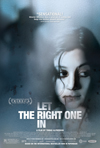
Swedish vampire? -no not that one - "Let the right one in"


LET THE RIGHT ONE IN

Directed by Tomas Alfredson

Cast Includes Per Ragnar, Mikael Rahm

Rating: R - Swedish director Tomas Alfredson brings the best-selling novel by John Ajvide Lindqvist to life in LET THE RIGHT ONE IN. A fragile, anxious boy, 12-year-old Oskar is regularly bullied by his stronger classmates but never strikes back. The lonely boy's wish for a friend seems to come true when he meets Eli, also 12, who moves in next door to him with her father. A pale, serious young girl, she only comes out at night and doesn't seem affected by the freezing temperatures.

Coinciding with Eli's arrival is a series of inexplicable disappearances and murders. One man is found tied to a tree, another frozen in the lake, a woman bitten in the neck. Blood seems to be the common denominator – and for an introverted boy like Oskar, who is fascinated by gruesome stories, it doesn't take long before he figures out that Eli is a vampire. But by now a subtle romance has blossomed between Oskar and Eli, and she gives him the strength to fight back against his aggressors. Oskar becomes increasingly aware of the tragic, inhuman dimension of Eli's plight, but cannot bring himself to forsake her. Frozen forever in a twelve-year-old's body, with all the burgeoning feelings and confused emotions of a young adolescent, Eli knows that she can only continue to live if she keeps on moving. But when Oskar faces his darkest hour, Eli returns to defend him the only way she can ...

Web page here http://sixshooterfilmseries.com/
Angelika theatres http://www.angelikafilmcenter.com/

Saturday, November 29, 2008

Favorite True Blood quotes from episode 9

Eric: Humans. Honestly Bill, I don’t know what you see in them.

Eric to Bill: Come. I’ll buy you a blood.

Eric: Tru Blood. It keeps you alive, but it will bore you to death.

Eric: Not smart, Bill. Not smart at all.

Jason to Amy: Cause any woman with a purse that big is bound to have something in it I don’t wanna know about.

Pam to Sookie: There’s vampire in your cleavage.

Tara to miss Jeanette: My soul don’t wanna get ripped off.

Lettie Mae to Tara: Men only bring flowers if they already slept with you and looking to again. That especially go for white men as black men are less prone to grovel.

Sam: Morning Sookie.
Sookie: Ain’t nothing good about this morning.

Sookie: Sometimes I wish I smokes, you know? So you could sneak outside without anybody knowing there’s something wrong with you.

Jason to Eddie: For a vampire you sure are a doughy fuck.

Bill to Pam talking about Eric: Tell me, do you enjoy it, living half way up his backside the way you do?

Bill: I liked Longshadow better.

Bill: Try to behave yourself.
Eric: Don’t I always.

Eric: Tick tock, Bill.

Pam: If I had any feeling I’d have the chills right about now.
Eric: Not me.

Love Bites: What Sexy Vampires Tell Us About Our Culture

By Sarah Seltzer , RH Reality Check

November 28, 2008

Teen vampire flick and pop-culture juggernaut "Twilight", like "Mama Mia!" and "Sex and the City" before it, shattered records this weekend and made female moviegoers hard to ignore.

"Twilight" is far from a feminist triumph, though: it's been interpreted by more writers than this one as a purity allegory perfectly tailored for a (hopefully fading) era of abstinence-hype and hand-wringing about "hook-up culture." With a heroine who yearns to both be ravished and bitten, and a hero loath to rob her of either soul or virginity, the "Twilight" plot arc sells a pseudo-empowering fantasy (men as the sexual and moral gatekeepers, leaving women free to express their desires) while wholeheartedly embracing patriarchal norms.

The film somewhat mitigates the book's rabid antifeminist message, providing more room to chuckle at the smoldering pouts of its young protagonists (whether that campiness was intended is unclear) and downplaying the extent to which human Bella's singular fixation with vampire hunk Edward precludes everything else. But the basic storyline of "I won't bite you, it's for your own good" can't be changed. It's the core of the tale.

Putting a Stake in Victorian Mores

This not the first time vampires in pop culture have been a perfect expression of the currents and anxieties of their time. In fact, one might argue that that is their purpose.

With immortality, a killer instinct, and a life on the fringes, Vampires are a perfect conduit for musings on the human condition. "Vampires have long served to remind us of the parts of our own psyches that seduce us," writes Salon's Laura Miller (in a superb analysis of the "Twilight" books). But the metaphor is often less existential than that, as the vampire bite is easy shorthand for sex. Vampirism allows consumers to take vicarious pleasure in rule-breaking couplings, while also justifying phobias about sex-because the seducers do have lethal fangs, and their condition is quite contagious.

Bram Stoker's Dracula, the most prominent sire of today's fictive undead, was a repository of post-Victorian fears: syphilis and shifting gender roles. Thus the book is full of bizarre sexualized imagery that equates gender-bending with evil. Hero Jonathan gets attacked and nearly bitten by a gang of wanton vampiresses. Lucy, an ill-fated flirt, juggles three suitors; by story's end all three of them must stake the undead Lucy in a scene that critics compare to a gang rape. Mina, the less transgressive woman in the story, is forced to drink blood from a wound in Dracula's chest, a reverse-breastfeeding image that emphasizes the feminine qualities of the Count.

The entire book feels like a last gasp of Victorian purity -- as well as an anticipation of the sexual revolution that was around the corner. It's probably no coincidence that the first film version of "Dracula" was a huge hit just as the Depression ushered out the Jazz Age and its socio-sexual upheaval.

Vampires in the Modern Era

Indeed, pop culture vampires have always adapted to rapidly shifting sexual politics. A film remake of "Dracula" in the late 1970s (starring Frank Langella) gave the Count a real romance with Lucy, no longer a doomed Edwardian flirt but instead an independent woman. In her history of vampires, Nina Auerbach describes this new Lucy as "everything a feminist vampire should be. Her romance with Frank Langella could be one of the swoonier inserts in Ms. Magazine. He loves her strength and self-assertion ... "

Anne Rice's beloved vampire hero Lestat (in books from the 70s onward) is a rule-breaking iconoclast (even a rock star) whose lack of gender preference when it comes to victims and vampire companions give bisexuality that familiar terror-and-titillation combination. In the 1994 film adaptation of Interview With the Vampire, more than a few reviewers noted the AIDS metaphors now found in a story conceived before the disease was known.

In the 1990s we had Buffy, a kick-ass vampire-slayer struggling both to save the world and grow up -- all while wearing hip, form-fitting outfits. She's the embodiment of the third wave feminist ideal, and the field of feminist criticism of Buffy is an intensely crowded one. Her very human struggles to "do it all," rid the world of demons, take care of her friends and family, and maybe meet a nice soulful vampire, interrogated the limitations of the "girl power" mantra and gave the world a truly multi-dimensional heroine. Buffy's protracted love affairs with two male vampires-Angel and Spike-range from sublime to abusive to egalitarian, reflecting the complex dynamics of sex and power in the modern world.

Today we have the HBO series True Blood, whose lusty vampires have started drinking fake blood, and are struggling for social and political equality. Comparisons to both racial and sexual civil rights battles are unavoidable, but the fact that some members of this oppressed minority don't want their rights -- they just want to eat humans -- complicates the metaphor.

And then there's "Twilight". If Buffy was the teen vamp tale of the Clinton years, "Twilight" is definitively its equivalent for the Bush era. Rather than kicking ass, "Twilight's Bella stumbles into danger, excusing her vampire-love-interest Edward's creepy protectiveness. Sigh.

It's unfortunate that the story, like the past decade has been, is so old-school. But before we feminists concern-troll "Twilight's" besotted teenage fans, let's remember this: the part of the formula that appeals so widely is not the story's morality, but rather its adolescent hunger. It's the sexual budding, the fraught glances across the cafeteria, the craving to be singled out, and in Dana Stevens' words "the grandiosity that can make self-destructive decisions feel somehow divinely fated." It's teenagedom. Edward gives younger girls a chance to express their nascent desires en masse, loudly.

Just as Dracula's reactionary plotlines failed to bring back Victorian mores, "Twilight's" unfortunate gender roles will join abstinence-only on the trash heap of history. Some of its screaming young fans will grow up to be sexually empowered, some won't, and some won't end up fancying men (dead or undead) at all. But they'll all share the fact that "Twilight's" dangerous liaison turned them on. And that's what Vampires, even sparkly ones, are for.

Sarah Seltzer is an RH Reality Check staff writer and resident pop culture expert. Sarah is a freelance writer based in New York City. Her work has been published in Bitch, Venus Zine, Womens eNews, and Publishers Weekly among other places. She formerly taught English in a Bronx public school.

© 2008 RH Reality Check All rights reserved.
View this story online at: http://www.alternet.org/story/109067/

Exclusive: FEARnet talks Vampires with 'True Blood's' Michelle Forbes!

Fri., Nov. 28, 2008 1:00 PM PST, by FEARnet
Michelle

We recently spoke with Michelle Forbes, the actress who plays Maryann on HBO’s True Blood! The lovely vet of such shows as Star Trek: The Next Generation (what sci-fi fan can forget Ensign Ro?), 24 and Homicide – and such films as Kalifornia and Escape from LA – shared her thoughts on vamps, and the possibility of her re-appearing as Admiral Helena Cain on Battlestar Galactica. Read on for our interview!

Your character on True Blood isn’t necessarily a huge fan of vampires, are you?

I haven’t been, [but]… It’s interesting as I’m exploring this world. The big question is why are vampires so big? It really is this wonderful mythology that keeps creeping through everybody’s consciousness and people are just so attracted to vampires and the world of vampires. Now I am. I’m a big fan of vampires. I’m beginning to understand what the appeal is.

How do you think True Blood’s approach to vampires differs from the many other TV shows and films on the subject?

For me, being new to the realm of vampires, it’s a very unique voice. It’s very, very funny. It’s very dark, it’s very sweet, it’s sexy, it’s Southern, it’s a mystery. It’s got a little bit of everything. It’s a very unique voice and I’m thrilled to be a part of it.

Had you read the books?

Yeah, I started reading them. They really are fun, they’re definitely page turners.

You’re known for playing quite strong women, and your character on True Blood is pretty much in that vein.

She is, indeed. I have yet to see where it’s going to go. But when it starts off, yes, she really has her own strength. But I have to say, having done In Treatment, it was really nice to play a repressed woman, a housewife, with no self esteem. That was actually a great luxury and gift to me. It was really fantastic to play someone who was not leading everyone and knew what was best, it was nice to be a woman who was like every person, who, you know, doesn’t know all the answers. You’re in a muddle, and you make wrong decisions. And she was all sort of elbows and knee joints emotionally. It was great fun to play, because I normally play very smart, together people, which I’m not.

Any chance we may get to see Cain again somehow on Battlestar Gallactica, if only in flashbacks?

Well I would always be happy to revisit that cast. I have so much respect for Ron [Moore] and David [Eick]. I would always go back. I don’t know, I think that story’s been told. But I said that the first time and came back for a film [Razor], so I don’t know, but I do feel that story’s been told and there are so many stories to explore. I mean it’s one of my favorite shows I’ve ever done.

Have they spoken to you about working again?

We’ve had conversations, and there might be something down the line but these aren’t the right ones.

What’s your greatest fear?

Oh, where do I start? This is going to be a lame answer, but physical suffering. Having to watch physical suffering. I always want to turn away, but you have to be there to help. And I think my own physical suffering – broken bones, car accidents, that sort of thing.

Subscribing to Loving True Blood in Dallas


*You can subscribe to this blog through your rss reader ( google reader, netvibes, myyahoo etc) using this feed link

or here ( click on RSS in subscribe to blog -box right hand column) http://lovingtruebloodindallas.blogspot.com/

*You can subscribe by email from feedburner here:


put your email address in the box far right column ( * there are about 10+ posts a day and some corrections so you might want to set up a seperate email address)

* You can also subscribe to this blog by using Odigo which will create a audio ( spoken word of the text) file for every post that you can then listen to online, or subscribe to through itunes or dowload the mp3 files. ( No I'm not kidding try it here )

"True Blood" Review and Interview with Creator Alan Ball

byBrian Juergens

Of course, fans of Six Feet Under know that Ball has a history of bringing to life unconventional and diverse gay characters. And there are similarities between the shows: both have eclectic ensemble casts that integrate gay and straight stories, both are unapologetically, almost aggressively sexual, and neither is afraid of shedding light on the darker corners of the human condition.

But while SFU was, in Ball's words, "existentially exhausting" in its unflinching discussion of life in the presence of death, True Blood's take on life in the presence of ... well, undeath ... is much lighter fare. Structured as a series of delicious mysteries (in the first episode alone we're tipped off that everyone has their secrets and that there's a serial killer lurking in their midst), this is thrilling, engaging, and more-than-a-little-dirty good fun.

I had the chance to speak with Ball about his approach to his first genre project and learned that, first and foremost, Lafayette is just the tip of the iceberg when it comes to gay characters (there will be others appearing later in the season) and gay storylines (there will be gay romances, and Lafayette will have more to do than flip po'boys and shovel gravel): "Certainly the vampires have this pansexual sort of thing. There's Lafayette, and later on we'll meet some more gay characters, and some more straight characters. There's something for everybody."


read on http://www.afterelton.com/TV/2008/9/alanball_trueblood?page=0%2C1


Also watch Brian's fantastic True Blood episode reviews on Bloodwork http://www.afterelton.com/taxonomy/term/1388

'True Blood': Q&A with Alan Ball

Alan Ball on True Blood ( upstart)

True Blood Gossip- Prive party Hollywood

It’s a "True Blood" weekend at Prive inside Planet Hollywood this weekend. To celebrate the finale of the HBO hit series, He-Man hunk Ryan Kwanten promises to keep his shirt on to host his party tonight at the hot nightspot. Then tomorrow, "True Blood" vampire Alexander Skarsgard will host his co-star Kristin Bauer’s birthday celebration at Prive.